








Stay Informed
Sign up here for the latest articles


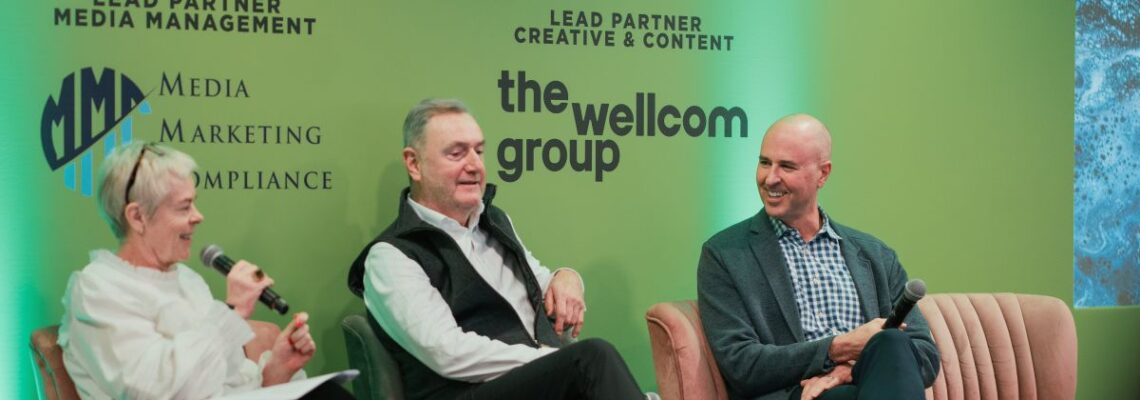
Morag Cuddeford-Jones speaks to ITG CEO Andrew Swinand, to find out how simply reframing the questions being asked of AI is where brands can begin unlocking future value.
AI is a brilliant tool that, right now, is often being asked to do the wrong thing. 2026 research from G2 backs this up, suggesting only 41% of marketers can prove ROI from AI – down from ~50% in 2025.
Combined with increasing demands on marketers and their agencies – cost pressures, content volumes, competitive pressure – and you can see why creativity is being squeezed more than ever, at a time when we’re told AI should be making it easier. But speak to Andrew Swinand, CEO of ITG, and he’ll tell you that AI has had a net negative impact on creativity to date. And yet the solution, he suggests, is actually quite simple. “We’ve got the right technology, we’re just asking it the wrong question.”
When Swinand spoke to the audience at Marketing Procurement IQ Conference recently, he suggested that simply flipping the narrative would make all the difference. “Instead of saying ‘I need AI’, marketers need to ask: ‘How do I leverage AI to better inform what I’m going to make and make it more efficiently?’”
Ideas matter more than ever
To understand how we’re going to get AI to the point where it is a valuable tool in the creative workflow, we first need to understand how AI and its close cousin, automation, have changed the landscape.
For an industry chock-full of awards celebrating creative excellence, it comes as a shock to realise that the output model was traditionally built on creativity receiving little to no financial value, while scaled production was rewarded. “You almost give away the idea for free – all the content, volume and localisation is where you would make money.”
Why? Because doing the legwork was hard. It took time and effort to take that creative concept and get it out into the world with – as ITG calls it – Halo content. In his previous position at Leo Burnett, Swinand ran a large automotive account. It was producing 66,000 assets using 450 people, all working at maximum capacity. The creative was at the heart of the brand’s success, but it was measured on manpower.
AI is brilliant at cutting down the legwork, at reducing those thousands of hours to, in some cases, just a few. However, by measuring creativity on manpower, procurement is adding two and two together and getting three. The knee-jerk reaction has been to think creativity needs less time and less money to create the same outputs because ‘AI will do it’.
Certainly, AI has an immense and immediate ability to help an organisation produce creative at volume. But it’s still rubbish at creative ideation – and this is where Swinand feels AI’s application is being misdirected. “In a sea of AI slop, you need an idea that’s differentiated,” Swinand insists. You need to use AI to extend great ideas to all the channels where that creative differentiation can thrive.
AI – the power behind the creativity
When you stop using generative AI as an ideas sausage-maker and instead use operational AI as a tool to unlock insights, connectivity and rapid distribution, that’s where you start seeing real results.
Technologies built on operational AI – like ITG’s proprietary, Gartner-leading Storyteq Content Marketing Platform – help creatives understand their audience. After all, as Swinand notes, “better creation demands better human understanding”. That means leveraging AI to analyse content performance, audience behaviours, interactions, trends – the stuff that would have taken human analysts months – and then to suggest the best content or next actions based on those insights.
Working with a global leader in technology, for example, ITG used Storyteq to examine 330 million online posts, along with customer data and content performance data in an afternoon, and got an AI agent to reveal the top 16 priorities for the brand to focus on. This then meant that, instead of making just 14 videos, the client could make 1,400 that delivered a fully personalised experience for different audiences. The personalised content tripled the ROI.
“Doing this ‘old school’, to find the best audiences, I would have eight planners spend two months scouring Google, just to put together a PowerPoint presentation of a customer journey map,” Swinand reveals.
What’s the problem?
Getting value – value as in worth, not value as in cheaper outputs – from AI comes back to asking the right questions and solving the right problems. “How do you solve the problem of ‘Big Creativity’?” Swinand asks. “You do it with better AI-powered insights, content automation and reuse at scale – those are the problems procurement should be focused on.”
Not least because marketing and communications is a prime target for cost-cutting. And it’s not sophisticated cost-cutting. It’s a blunt instrument focused purely on efficiency rather than effectiveness – the difference between saying ‘find me 20% in savings’ and instead asking ‘how can AI help us redefine how we get work done?’
Indeed, at the same conference, Laurence Green, Director of Effectiveness at the IPA, pointed out that “You’re going to be asked for more and more savings and you have to think about how this is going to impact on outcomes. Do not cut the wire that sets the bomb off.”
Is it contentious to say that this might be the prod the industry has been waiting for? The burning platform that finally forces it to confront the AI reality? Will cost pressures stop teams fiddling round the edges with unfocused pilots and churning out the aforementioned slop, and instead use operational AI to become an efficiency engine that simultaneously powers efficacy?
“It’s about enabling a content ecosystem that leverages AI. Even setting it to solve the simplest tasks (for a machine) is going to deliver huge returns in terms of agencies’ ability to deliver better, faster, cheaper, market-leading campaigns,” Swinand insists.
Use AI for efficiency to free investment in creativity
One such simple task is getting control of assets. Swinand reveals that, by pointing ITG’s Storyteq DAM at a global beverage company’s asset library, it found 3,326 images of the same bottle. That is pure cost: cost to shoot, cost to store, cost to find. Around 80% of assets in DAMs go unused, and 20% of agency time is spent hunting for the ones that are. Introduce AI-powered dynamic meta-tagging and intuitive natural language search through the DAM, and you make these assets findable, reusable and – crucially – valuable.
Armed with information like that, it’s easier to address the cost-cutting issue because now you’re starting to look at the right metrics. In this case, you start asking the question ‘how many times are you reshooting stuff you don’t need to?’. Every brand has these kinds of inefficiencies living in their operational ecosystem, and AI is great at revealing them.
The ultimate goal of using AI in the creative process should not be purely to see lower figures in the outgoings column. Instead, it should be used to grow the figures in the incomings one. The same expenditure generating 20% more revenue is still a saving, after all – and an impressive one at that.
“The big idea with AI,” Swinand concludes, “is to create the efficiency you need to invest in the efficacy.” By connecting everything in the background, tightening up operational drag, and getting rid of the bottlenecks, AI creates the space for creativity to thrive. That’s real competitive advantage.
Andrew Swinand, is CEO of ITG (Inspired Thinking Group)