





Stay Informed
Sign up here for the latest articles


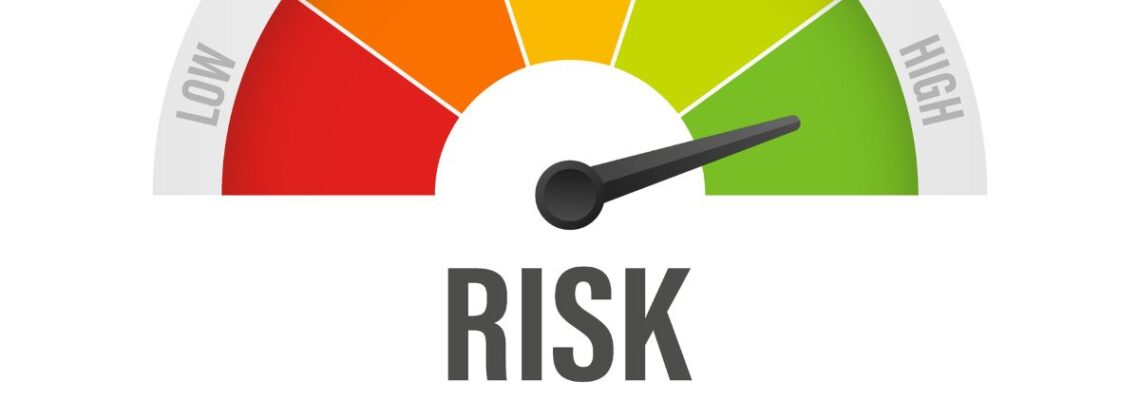
Geopolitics, economic outlook and AI are the top perceived sources of risk, with budgets under greater scrutiny and more multinationals looking to internal collaboration to minimise dangers.
Geopolitics, economic outlook and AI are the top perceived sources of risk. Budgets under greater scrutiny (up 18% to 97%) and 23% more multinationals (up to 92%) are looking to internal collaboration to minimise dangers. These are the key findings from the latest WFA report.
Risk and uncertainty are the new watchwords for marketers and senior policy leaders, according to WFA’s latest Global Risk Barometer run in partnership with transformation consultancy, The Intangibles.
More than 90% of senior marketers and policy leaders say the business environment is less predictable and riskier than 12 months ago and nearly eight in 10 (79%) agree it does not feel like business as usual.
As one respondent to the research noted, what has happened in the last couple of years is a noticeable uptick in the pace of change and the rising level of risk and its implications: “Risk has always existed and influenced decision-making. It is the form and function of risk which is changing.”
The findings are based on responses from senior marketing and policy executives at some of the world’s biggest companies with 46 respondents from 39 companies across 14 sectors representing a cumulative marketing spend of $61bn globally. Seventy-three percent of respondents have global responsibilities. The survey was conducted in February and March 2026.
While the headline figures on risk and uncertainty are broadly similar to those recorded by WFA in its 2025 Risk Barometer, other elements of the response are not. Budget scrutiny is now felt to be “heavier” than 12 months ago by 97% of senior executives, compared to 82% last year, an increase of 18%.
The pressure to take a short-term approach is clear, with 70% agreeing they must focus more on immediate objectives at the expense of long-term strategic planning, up 15% from the 61% recorded in 2025.
In addition, 73% record increased expectation from their boards for them to develop more formal risk mitigation strategies and actions to help smooth the new operating environment. Eight in 10 (79%) say they see a closer collaboration between different C-suite functions to mitigate risk.
More than nine in 10 (92%) are now looking at internal ways of working to mitigate risk, with 92% saying they see greater cross-functional collaboration to reduce risk. This compares with 75% who said the same last year, up 23%.
A majority (51%) have now created cross-functional groups to mitigate risk, incorporating experts from marketing, legal, strategy, corporate affairs and policy in many companies. In nine in 10 of these instances (89%) marketing, legal and strategy are involved.
One other noticeable change is the rise of technology as a primary source of risk. Senior marketers now rate tech such as AI as 6.9 on a scale of 1-10 compared to 6.3 in 2025. That still puts it behind the geopolitical environment (8.3) and economic trends and outlook (7.7), but it now rates ahead of tightening regulations (6.6).
The vast majority (93%) of respondents now agree they are being expected to do more with less investment and resource as they seek to balance short term financial impact with long-term value creation.
“Marketers are used to navigating risk but the unprecedented interplay of geopolitical, economic and tech-driven uncertainties makes this a uniquely complex operating environment. And all this at a time when budgets are facing unprecedented levels of scrutiny. Moments such as these are when great marketers step to the fore, focus on controlling the controllable and turning uncertainty into advantage” said WFA CEO Stephan Loerke.
One respondent summed up the interplay between the range of risks and the slow pace of product development as a key challenge: “The geopolitical environment with shifts in targets, tariffs and threat of new entrants have created uncertainty and challenges not experienced in the previous decade. Product planning is a long process and when sudden changes are made to legislation and protectionist actions are implemented this causes significant challenges.”
“No real surprise that another year passes with the world less predictable and riskier than the last. The new secret sauce of brand stewardship is fast becoming the ability to know how to tackle these layers of challenge whilst capitalising on the new opportunities that always arise. A strategic North Star, frameworks for alignment and prioritisation, and new models for decision-making that see both sides of the risk/reward coin simultaneously, will need to be in place to allow for all to make the best decisions,” said Jon Wilkins, founding partner, The Intangibles.