






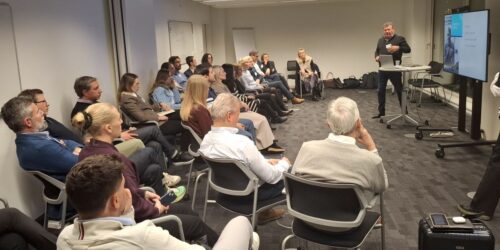




Stay Informed
Sign up here for the latest articles


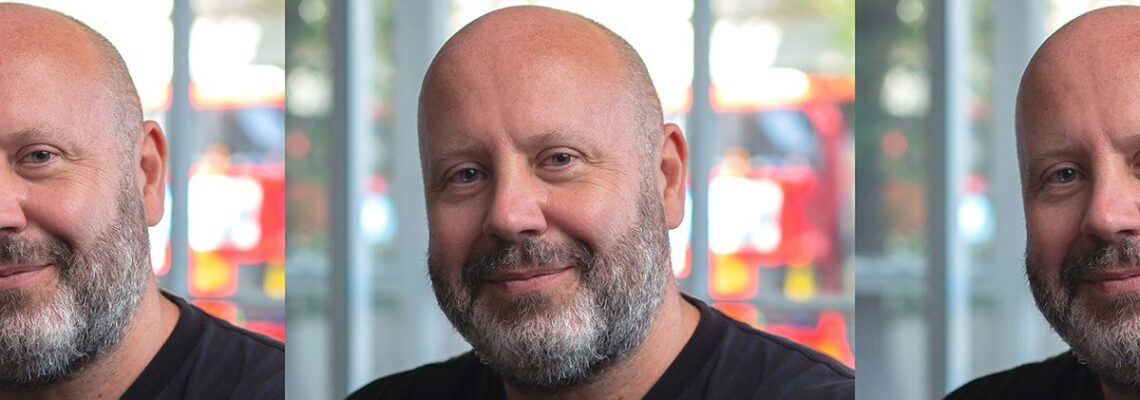
By Darryl Newton
Closing the gap between creative and production is no longer optional—it’s the key to protecting ideas, driving efficiency, and delivering real impact at scale.
The middle seat on a long-haul flight. The quality of your morning coffee. The sound from a pair of headphones that you’ve spent too much on.
There are some things in life you really don’t want to compromise on. And the same goes for your professional career, too. Things that, as a marketing procurement leader, has you putting your head in your hands and wondering why it always seems to be this way.
One compromise I’ve seen far too often in a twenty-year career spanning content and production is the gap between creative thought and production output.
Where a brilliant idea that had a whole room energised is diluted due to poor processes or timing constraints. Or where the integrity or consistency of a brand message dies because it’s applied so poorly across one-too-many markets.
Somewhere along the line, many major organisations have just accepted this compromise. Briefing processes get duplicated. Local markets reinvent wheels that global teams already turned. Compliance and brand governance become afterthoughts rather than built-in safeguards.
And who can blame them? The marketing industry is an increasingly scalding pressure cooker.
The demand for content has never been higher — more channels, more markets, more formats, more variants. And at the same time, the competition for audience attention has never been more fierce. You need those eyeballs and you need them now.
The response from marketing teams tends to be one that sends a collective shiver down the spines of marketing procurement professionals. Throw more resource at production. Head down another AI rabbit hole.
Review the agency roster to replace one holding company goliath with another. All promise greater efficiencies. All tend to make things more complex.
Another way
When we sold our video production business, Wooshii, to MSQ in July last year (the business became part of M3 Labs), it was because we knew there was a way for clients to avoid making the compromises they do across the creative and production process.
Wooshii was a successful technology-enhanced production business, but as an independent agency, all the collaborative culture in the world wasn’t going to enable us to effectively close the creative and production gap.
As a leading creative, media and tech group, MSQ, on the other hand, was already well versed in joined-up thinking. It understood the end-to-end process and wanted agencies that could develop and implement more intelligent platforms.
And, crucially, whilst MSQ was large enough to invest in and implement industry-leading tech, whilst working with some of the biggest organisations in the world, it also wasn’t saddled with the scale, politics and massive overheads that stops the biggest holding companies from making progress.
That was music to my ears and meant we were able to immediately put our ‘no compromise’ thinking to work.
What no compromise means in practice
The result is a ‘No Compromise’ content engine, orchestrating every stage of the production workflow together – from strategy and creative to production – in one connected system.
At its core, the Content Engine enhances the talent of MSQ’s creative teams. It blends market leading AI, global production expertise, and diligent human oversight to make sure innovation never compromises quality or ethics. Built to flex around each and every client’s needs.
And because it’s fully enveloped by MSQ’s proprietary AI platform, MSQ Assist, it unifies briefing, production, and central to localised delivery – built for enterprise scale, with robust security, compliance, ISO certification, and AI agents designed to operate safely and reliably.
That’s what always excited me. To be able to offer marketers an engine that’s grounded in deep production expertise, but combines talent (both our agency talent and 16,000 global creators we have at our fingertips), technology and process to transform how content is created, delivered, and scaled.
Better still, performance data also feeds directly back into production, so every asset is purpose-built and continuously optimised for impact.
Marketers aren’t waiting for a quarterly review or campaign debrief – with tools like BrandCheck baked in, the process is a continuous, intelligent loop that makes the next piece of work better informed than the last.
Future-proofing the marketing process
What’s been really nice about building the No Compromise platform is that we’ve not been a production agency going into war with a creative department. We’ve been building and iterating together because it’s clear we’re all working towards the same goal.
In a world where agencies are pushing AI tools at every turn, this isn’t a pure technology play that removes human judgement from the process. It’s an effort to reduce the early stage development busywork so brilliant creative teams can spend more time on quality thinking.
For the AA, for instance, we’ve cut roughly 30% of time from briefing to ideation so that our creative teams can dedicate their time to coming up with bigger and bolder thinking. Bringing image generation into our mix, for instance, has allowed the teams to create full storyboards on the fly.
Other major global organisations we work with, like Amazon, Chase and Porsche, have seen the benefits too. Because they, like us, believe the time is now for the gap to close.
Technology has crossed the line from theoretical to enterprise-ready. The platforms are secure. The processes are proven. The forward-thinking brands are doing it and their efficiency gains are measurable.
And this is why I’m pleased to see our team talking about this very subject at the Marketing Procurement IQ Conference.
Because marketing procurement leaders are perfectly placed to understand the structural issues and ensure that the creative-to-production process is treated as an integrated challenge rather than two separate problems.
Particularly when, as you’ll likely see from much of what’s being discussed by vendors desperate for a moment in the spotlight, that the scramble for AI-powered production could leave creative thinking out in the cold.
We think that, to truly engage consumers, creativity needs to be a more powerful tool in a brand’s armour than ever. So when you land on that campaign that’s strong and distinctive and energising – don’t dilute its integrity with shortcuts, badly activated local solutions and layers of process that halts momentum.
If you can build efficient, integrated creative-to-production infrastructure now, it will compound the advantage over time.
If you don’t, you could quickly find yourself between rising content demand, tightening budgets, and an AI landscape that’s moving faster than a marketing department’s process can adapt to. Don’t compromise.
The No Compromise Content Engine – helping you close the creative and production gap
About the author
Darryl Newton, Chief Executive of M3 Labs, MSQ’s global production company