






Stay Informed
Sign up here for the latest articles



At Marketing Procurement iQ 2026, Production Unplugged signals a decisive shift from cost-cutting to value orchestration—urging brands to get closer to the makers and unlock the full power of modern, agile creative production.
“When everyone takes off their company hats and puts the brand at the centre – that’s when the best work happens,” they said. “That’s the future we’re building toward.”
As the curtain closes on Marketing Procurement iQ 2026, the atmosphere in the room reflects a fundamental shift in the industry.
There is less talk of “efficiency” as a euphemism for cost-cutting and more focus on “efficacy”—the raw power of creative production to move needles and solve business problems.
At the heart of this evolution is a provocative initiative that has spent the last year dismantling the traditional silos between brands and the people who actually build their stories: the APA’s Production Unplugged.
For the marketing procurement community, the “unplugged” philosophy represents more than just a new way to source; it is a strategic rethinking of the supply chain.
It is an acknowledgement that in an era of 80% in-housing and AI-accelerated workflows, the shortest distance between a brand’s challenge and a creative solution is a direct line to the maker.
The genesis of a movement
The story of Production Unplugged began with a data-driven insight.
In 2024, an Advertising Producers Association (APA) report titled “What clients want from advertising today and how they can get it”—based on insights from 27 senior marketing and procurement leaders across the UK and EMEA —revealed a striking paradox.
While the lead creative agency remains the most trusted relationship for marketers, there is a growing desire for closer, more transparent relationships with “makers”.
Brands are increasingly confident in their creative capabilities. For example, 80% of content for some brands is now produced in-house. This shift is exemplified by internal powerhouses like PepsiCo’s Sips & Bites, which has transitioned from an experimental unit to an Effie-winning, global leader.
Yet, despite this internal growth, brand leaders expressed a recurring frustration: they loved discovering new production talent but simply lacked the time to research everyone. They felt trapped behind legacy processes and layers, distanced from the specialized craft needed for high-level execution.
Enter Janet Markwick and Rhona Glazebrook (Co-Founders of J&R Collective). Working in partnership with the APA, they envisioned a forum that stripped away the filters.
“We’ve seen a significant shift in how brands approach creative production,” say Markwick and Glazebrook . “Creative confidence in-house is booming. But to sustain that, brands need partners who can flex and adapt to commercial realities.
We chose the tagline ‘Get closer to the makers’ because that’s where you find the magic under the bonnet.”
The “Unplugged” architecture: a bold forum for modern marketers
When Production Unplugged debuted on May 1st, it wasn’t a standard conference. It was a fast-paced, curated ecosystem built around six “zones” that mirrored the priorities of the modern marketer: Agility, Smart Production, Customer Experience, ESG, Innovation, and Connectivity.
The event was designed to be as agile as the production companies it featured. In place of long-winded sales pitches, curators—including senior brand-side leaders from the likes of Waitrose, Channel 4, Diageo, Sainsburys, Vodafone, SKY—helped select case studies that demonstrated the “how,” not just the “what.”
This focus on commercial creativity— where creativity solves real business problems—is what has resonated so deeply with the procurement community here in 2026.
Evidence in action: the Marketing Procurement iQ panel
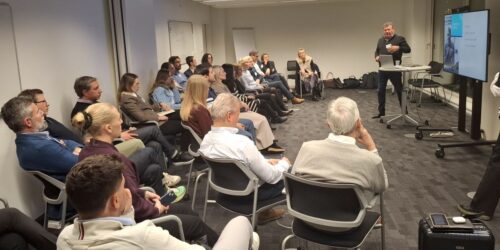
At this week’s Marketing Procurement iQ, the Production Unplugged initiative took centre stage through a panel titled “The Maker Advantage: Empowering Procurement through Direct Production Intelligence”.
Chaired by Markwick, the session featured four distinct case studies demonstrating how direct collaboration fosters the transparency and agility needed to maximize marketing efficiency.
1. The human / AI frontier (Isabelle Du Plessis, Partner, Imagine This)
In a world of rapid technological change, the panel explored how human craft, in collaboration with AI, can unlock new creative possibilities. For procurement, this isn’t just about speed; it’s about maintaining brand integrity while facilitating agile production that meets today’s market speeds.
2. Global consolidation & smarter deployment (Anissa Payne, Founder, NM Productions)
The discussion highlighted how direct engagement enables smarter, auditable spend and reduced regional risk through consolidated scale. By removing the “black box” of traditional production, procurement gains the intelligence necessary to provide transparency by design.
3. The embedded model (Ben Uttley, Founder, Stamp In-House)
Addressing the rise of in-house creative teams, the Stamp In-House looked at how embedded models solve the dual need for procurement accountability and marketing’s creative ambition. This “Maker Intelligence” ensures that operational efficiency never comes at the cost of creative effectiveness.
4. Music IP and asset ownership (Simon Robinson, MD, Pitch & Sync)
Finally, the Pitch & Sync tackled the complexities of music IP, demonstrating how flexible rights models can unlock brand value and reduce risk for successful in-housing. This is where procurement moves from simple cost management to true value orchestration.
Enhancing procurement’s role as value orchestrators
As we reflect on the success of Production Unplugged, the message for the marketing procurement community is clear: this is a opportunity to step closer to the craft, moving beyond cost to value orchestration.
The 2024 APA report highlighted that while 62% of brands still try to triple bid, many find the process outdated for modern, fast-paced content needs. Marketers are calling for “fleet-of-foot” approaches to the triple bid that align with today’s budgets and timelines.
The “brand-side” perspective shared during this event offers unique insight into how direct maker-engagement transforms the bottom line. When procurement professionals bridge the gap between high-level strategy and technical execution, they gain the “Maker Intelligence” required to lead the next era of brand growth.
Looking ahead
As we leave the 2026 Marketing Procurement iQ event, the lesson of Production Unplugged remains: get closer to the makers. The world of production is fast, agile, and high-energy. It is no longer enough to manage production from a spreadsheet; you have to be in the room where the craft happens.
“For decades, the relationship between procurement and production was often kept at arm’s length, filtered through layers of management,” says Steve Davies, CEO APA.
“But the ‘Maker’s Dividend’ we see today is the result of a deliberate pivot. Our members aren’t just experts in craft; they have become experts in commercial agility.
We recognise that modern procurement professionals aren’t looking to simply cut costs—they are looking to de-risk the creative process and find ‘fleet-of-foot’ solutions.
By opening up direct lines of communication, production companies are providing the transparency and ‘Maker Intelligence’ that allows procurement to move from being a gatekeeper to a value orchestrator.
We’ve moved beyond the black box; we’re now in the room together, solving business problems in real-time.”
The initiative has now evolved into an ongoing resource, including the Production Unplugged Directory; a permanent toolkit of case studies that have been curated by brands, for brands.
Ultimately, Markwick and Glazebrook hope the Production Unplugged Initiative changes how the industry collaborates.
“When everyone takes off their company hats and puts the brand at the centre – that’s when the best work happens,” they said. “That’s the future we’re building toward.”
That is the future of marketing procurement: a direct, unplugged connection to the people who make the magic happen.